Africa is very rich in biodiversity and is the last place on Earth with a significant assemblage of large mammals. This natural richness, accumulated over millions of years, coupled with the wealth of indigenous and local knowledge on the continent, is central to the pursuit of sustainable development in the region. Yet the decline and loss of biodiversity is reducing nature’s contributions to people in Africa, affecting daily lives and hampering the sustainable social and economic targets set by African countries. This map shows the number of threatened mammal species by country, assessed by the International Union for the Conservation of Nature (IUCN) and documented in the IUCN Red List of Threatened Species. Established in 1964, the IUCN Red List is a critical indicator of the health of the world’s biodiversity that helps inform necessary conservation decisions.
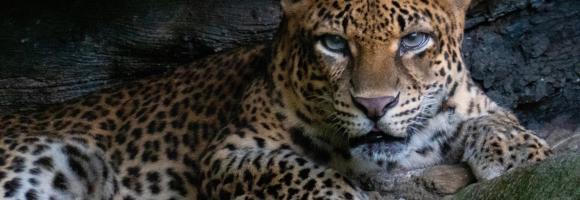
Where are the best places to spot the most requested wildlife-watching species? This grid layer presents a richness index of top wildlife watching species/groups, including rhinos, elephants, lions, leopards, buffalos, giraffes, lowland and mountain gorillas, chimpanzees, bonobos, sifakas, ringtails, aye-aye, mouse lemurs and colobus.
Displays areas where the geographic range of two or more endemic bird species overlaps. While many bird species are widespread, over 2,500 are endemic and restricted to an area smaller than 5 million hectares (restricted-range species). BirdLife International has mapped every restricted-range species using geo-referenced locality records. Through this process, they identified regions of the world—known as “Endemic Bird Areas” (EBAs)—where the distributions of two or more of these species overlap. Half of all restricted-range species are globally threatened or near-threatened, and the other half remain vulnerable to loss or degradation of habitat. The majority of EBAs are also important for the conservation of restricted-range species from other animal and plant groups. The unique landscapes where these bird species occur, amounting to just 4.5% of the earth's land surface, are high priorities for broad-scale ecosystem conservation. Geographically, EBAs are often islands or mountain ranges, and vary considerably in size, from a few hundred hectares to more than 10,000,000 hectares. EBAs also vary in the number of restricted-range species that they support (from two to 80). EBAs are found around the world, but most (77%) of them are located in the tropics and subtropics.
The IUCN IMMA layer identifies specific habitat areas crucial for one or more marine mammal species, which may be suitable for conservation through delineation and management. IMMAs represent regions that could benefit from targeted protection and/or monitoring. They serve as a marine mammal data layer highlighting important biodiversity, and potentially ecosystem health, which can be prioritized for protection and management by governments, intergovernmental organizations, conservation groups, and the public.
The availability and quantity of observational species occurrence records have greatly increased due to technological advancements and the rise of online portals, such as the Global Biodiversity Information Facility (GBIF), coalescing occurrence records from multiple datasets. Funded by the world's governments, this international network and data infrastructure is aimed at providing anyone, anywhere, open access to data about all types of life on Earth. This map displays all the observations reported to the GBIF from 1600 to present. This knowledge derives from many sources, including everything from museum specimens collected in the 18th and 19th century to geotagged smartphone photos shared by amateur naturalists in recent days and weeks. Individual records are available at https://www.gbif.org