ArcX (Africa Regional Centres of Excellence) is at the forefront of Africa's sustainable development, driven by a collaborative effort between Africa and Europe. Our mission is to advance Science, Technology, and Innovation (STI) to meet the challenges of the green transition.
About ArcXCall for Proposals
Browse current and upcoming calls for proposals under the ArcX programme.
View Calls




Africa is facing major challenges and pressures that threaten sustainable development, including climate change, environmental degradation, unsustainable resource management, biodiversity loss and uneven technological development. These dynamics weaken ecosystems and livelihoods and make the green transition both urgent and unavoidable.
The Africa Regional Centres of Excellence (ArcX) programme (2023 -2030) aims at strengthening collaboration between African and European institutions, fostering inclusive green growth and innovation and capacity, as well as supporting Africa's transformative agenda. The ArcX programme is financed by the EU through the Directorate-General for International Partnerships (DG INTPA) through the Neighbourhood, Development and International Cooperation Instrument – Global Europe (NDICI-GE) in line with the EU’s Global Gateway strategy . It is part of the broader AU–EU Science, Technology, and Innovation (STI) Partnership.
ArcX helps position Africa as a key player in the global green transition. It currently supports 51 African Centres of Excellence in 22 African countries, together with 11 partner organisations in Europe. Regional Centres of Excellence (RCoEs) supports these centres by acting as hubs of innovation. They work in five thematic areas (Agroecology, Biodiversity & Forests, Water, Ocean, and Climate Change resilience) and one cross-cutting component. ArcX aims at:
- Strengthening Regional Centres of Excellence: enhancing their capacities in their respective thematic areas. This includes upgrading research infrastructures, fostering gender-sensitive approaches, and improving data collection, sharing, and analysis. ArcX also benefits to communities most vulnerable to environmental change by strengthening local capacity and the development of skills among African scientists, practitioners and policymakers.
- Promoting knowledge generation and management: this entails cross-sectoral collaboration, open science, and partnerships between African and European stakeholders to produce evidence-based policies and innovative solutions.
- Supporting practitioners and policymakers: providing tailored services, decision-support systems, and capacity-building activities to improve policymaking, innovation ecosystems, and business development.
- Creating networking and collaboration opportunities: facilitating intra-regional and inter-regional African, and Africa-EU partnerships.
To zoom in/out, hold the ctrl key and scroll the mouse wheel/trackpad up or down
Title: Transversal Component.
Main Objective: Operate through the JRC’s Africa Knowledge Platform and serve as an integration engine, connecting thematic sectors and aligning the contributions of the RCoEs around a unified and coherent vision.
Specific Objectives:
- Ensure effective coordination of the ArcX programme through a robust and well-managed transversal mechanism;
- Enhance the science–policy interface by providing targeted support services that facilitate evidence-based decision-making;
- Strengthen knowledge circulation and collective learning across ArcX through an efficient and interoperable knowledge management mechanism;
- Promote inter-sectoral networking and partnership opportunities by delivering tailored support services that connect actors across thematic and regional domains.
Starting Year: 2023
Implementation Duration: 6 years
Areas of Impact:
- Strategic coherence;
- Programme efficiency;
- Reduced duplication;
- Evidence-based decisions;
- Policy harmonisation;
- Uptake of scientific insights;
- Knowledge circulation;
- Collective learning;
- Scaling of innovations;
- Innovation ecosystems;
- Cross-sector alliances;
- Private-sector + Africa–Europe cooperation
Target Groups: Regional Centers of Excellence.
ArcX Partners: See ArcX Partners card and the ArcX Partnership Map.
Component Coordinator: Agriconsulting Europe S.A. (AESA).
Scientific and Technical Support from EC - DG JRC: DG-JRC Directorate D (Sustainable Resources) Unit D6 (Nature Conservation and Observations).
Component Coordinator(s)




Title: Africa Regional Centres of Excellence - ArcX: Biodiversity & Forest Component.
Main Objective: The Biodiversity & Forest Component of the ArcX programme focuses on the sustainable management of biodiversity, forests, protected areas, and ecosystems across Africa. Its goal is to maintain ecosystem services essential for the well-being of local populations.
Specific Objectives:
- Establish Regional Centres of Excellence (RCoEs) as reference points for biodiversity data to inform policies;
- Develop indicators and information systems to monitor the EU-supported NaturAfrica initiative;
- Enhance cross-sectoral and cross-regional coordination among stakeholders to address challenges in Science, Technology, and Innovations (STI) for Africa’s green transition;
- Focus on metrics for decision-making, effective management of protected areas, development of forest information systems, and supporting national conservation efforts and global reporting (e.g., NBSAPs).
Starting Year: 2024
Implementation Duration: 48-54 months
Areas of Impact:
- Data Collection and Sharing: Harmonising and making biodiversity, forestry, and ecosystem data accessible through open-source systems;
- Scientific and Policy Support: Delivering scientific and policy analyses to improve regional decision-making;
- Capacity Building: Strengthening institutional and human capacities for better coordination among biodiversity stakeholders;
- Global Engagement: Collaborating with continental and global institutions like the CBD to sustain biodiversity conservation and ecosystem services.
Target Groups: Continental bodies, research institutions, academia, civil society, private sector, local communities, and all African citizens.
ArcX Partners: See ArcX Partners card and the ArcX Partnership Map.
Component Coordinator: Center for International Forestry Research and World Agroforestry (CIFOR-ICRAF).
Leading Regional Centre of Excellence (RCoE): Centre de Suivi Ecologique (CSE) (RCoE Western Africa), Observatoire des Forets d'Afrique Centrale (OFAC) (RCoE Central Africa), Regional Centre for Mapping of Resources for Development (RCMRD) (RCoE Southern and Eastern Africa)
Scientific and Technical Support from EC - DG JRC: JRC Unit D6 (Nature Conservation and Observations).
Component Coordinator(s)
Leading RCoE(s)


Other RCoEs





Unit F.2 - Environment, Sustainable Natural Resources
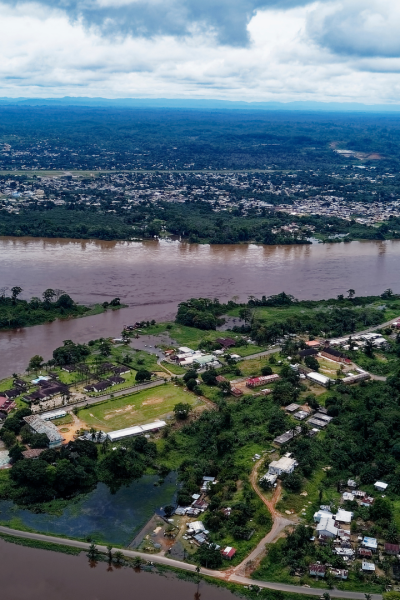
Title: Africa Regional Centres of Excellence - ArcX: Water Component.
Main Objective: Strengthen water governance and resilience in Sub-Saharan Africa through research, capacity building, and inclusive solutions for sustainable water resource management and equitable access to WASH services.
Specific Objectives:
- Conduct research on climate, hydrology, and the Water–Energy–Food–Ecosystem (WEFE) nexus;
- Provide science-based recommendations for water management and environmental risk reduction;
- Develop human capacity through training and mobility programmes for young professionals.
Starting Year: 2024
Implementation Duration: 48 months
Areas of Impact:
- Hydrology and Climate: Studies on surface and groundwater under changing climatic conditions;
- Water Management: Policy and decision-support for transboundary basin management;
- WEFE Nexus: Cross-sectoral linkages among water, energy, food, and ecosystems;
- WASH: Equitable access to water, sanitation, and hygiene services with gender-sensitive delivery mechanisms.
Target Groups: AUDA-NEPAD Networks of Water Centres of Excellence, regional organisations, river basin authorities, policy stakeholders, service providers, young professionals, and end-users.
ArcX Partners: See ArcX Partners card and the ArcX Partnership Map.
Component Coordinator: University of Stellenbosch.
Leading Regional Centre of Excellence (RCoE): University of Stellenbosh
Scientific and Technical Support from EC - DG JRC: JRC Unit D2 (Ocean & Water).
Component Coordinator(s)


Leading RCoE(s)
Other RCoEs















Title: Africa Regional Centres of Excellence - ArcX: Agroecology Component.
Main Objective: Strengthen Regional Centres of Excellence (RCoEs) in agroecology across sub-Saharan Africa to accelerate the transition towards productive, resilient, and sustainable food systems by integrating agroecological principles with scientific and local knowledge.
Specific Objectives:
- Strengthen the scientific, technological, and institutional capacities of sub-regional organisations (SROs) and RMRNs/RCoEs in agroecology;
- Enhance the contribution of RMRNs/RCoEs to transformative, high-quality agroecological research;
- Improve cross-sectoral and inter-regional coordination to tackle science, technology, and innovation challenges in Africa’s green transition.
Starting Year: 2024-25
Implementation Duration: 38–46 months
Areas of Impact:
- Data collection & sharing: Document and disseminate agroecological practices through open-source platforms;
- Decision-support: Produce scientific and policy analyses for informed strategic planning;
- Capacity development: Deliver targeted training and strengthen professional networks;
- Innovation support: Develop and scale up innovative agroecological solutions;
- Global engagement: Integrate African agroecology into international frameworks and global fora.
Target Groups: Scientific community (economists, agronomists, food-system experts, etc.), data and information managers, international organisations, private sector, universities, local communities, regional economic communities, continental bodies, African farmers, and citizens.
ArcX Partners: See ArcX Partners card and the ArcX Partnership Map.
Component Coordinator: Forum for Agricultural Research in Africa (FARA) and Regional Universities Forum for Capacity Building in Agriculture (RUFORUM).
Leading Regional Centre of Excellence (RCoE): Centre for Coordination of Agricultural Research and Development for Southern Africa (CCARDESA), International Centre of Insect Physiology and Ecology (ICIPE), West and Central African Council for Agricultural Research and Development (CORAF)
Scientific and Technical Support from EC - DG JRC: DG-JRC Directorate D (Sustainable Resources) Unit D5 (Food Security) and Unit D4 (Economics of the Food System).
Component Coordinator(s)
Leading RCoE(s)



Other RCoEs













Title: Africa Regional Centres of Excellence - ArcX: Ocean Component.
The OPERA project (Ocean Prediction Enhancement in Regions of Africa) represents the ArcX Ocean component.
Main Objective: To improve ocean resources sustainability and human welfare by strengthening digital and scientific capacities in ocean monitoring and forecasting in Sub-Saharan Africa.
Specific Objectives:
- Build cooperation and foster a coordinated and dynamic African ocean prediction community to enhance regional leadership and global collaboration in ocean monitoring and forecasting
- Strengthen African capacities in ocean monitoring and forecasting at national, regional, and pan-African levels, improving access and use of digital ocean resources
- Strengthen ocean regional and coastal forecasting systems for Essential Ocean Variables (currents, sea height, temperature, salinity, fish abundance, etc.)
- Develop fit-for-purpose ocean data-driven applications and services to support sustainable blue economies, protect coastal communities and safeguard marine ecosystems
- Develop an African Digital Twin Ocean/ocean Knowledge Hub framework to enhance sharing, accessibility, and use of digital ocean resources for informed decision-making and continued innovation
- Strengthen the uptake and long-term impact of the project’s results by engaging stakeholders and users through co-design, targeted activities and knowledge tools, while fostering private sector participation and stronger links with policy.
Starting Year: 2025
Implementation Duration: 60 months
Areas of Impact:
- Support policy and foster long-term commitment to help achieve goals of key ocean related priorities in African and European frameworks and increase long-term support for ocean monitoring and forecasting
- Cooperation and community building to expand ocean prediction community in Africa, fostering cooperation within sub-Saharan Africa and with the global community
- New services and applications to support disaster risk reduction and response, blue economy and marine conservation efforts
- Capacity sharing knowledge & technology transfer
- Strengthened capabilities enhance ocean monitoring and forecasting capacities
- Stronger science policy pathways and engagement of the private sector.
Target Groups: African governments and decision-makers, Regional Centres of Excellence and scientific institutions, Local and regional authorities involved in coastal management and risk reduction, Blue economy stakeholders (fishing, aquaculture, maritime transport, offshore energy, etc.), Civil society (coastal communities, NGOs, citizen scientists).
ArcX Partners: See ArcX Partners card and ArcX Partnership Map.
Component Coordinator: Mercator Ocean International, as coordinator of the OceanPrediction Decade Collaborative Centre (Click here to register).
Leading Regional Centre of Excellence (RCoE): Mercator Ocean International
Scientific and Technical Support: Capacity Development – UNESCO Chair of Mathematical Physics and Applications CIPMA), Gulf of Guinea Ocean Sciences Summer School (GGOSSS), University of Abomey Calavi

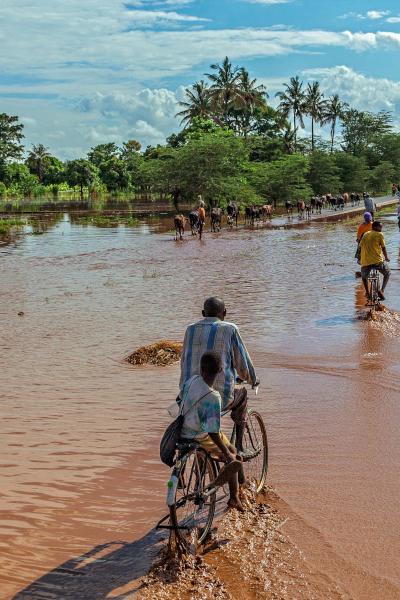
Title: Africa Regional Centres of Excellence - ArcX: Climate Change Resilience.
Main Objective: Strengthen the climate change and disaster resilience in Sub-Saharan Africa, by improving scientific and technological capacities of the Regional Centers of Excellence, their co-ordination and capacity to contribute to policy and decision making.
Starting Year: 2026
Implementation Duration: 48 Months
Areas of Impact: Early Warning and Disaster Risk Reduction; Digital Transformation and AI Innovation; Climate Information Systems Strengthening; Research and Knowledge Generation; Capacity Development and Partnerships
Target Groups: African Regional Climate Centres (RCCs); National Meteorological and Hydrological Services (NMHSs); Regional Specialized Meteorological Centres (RSMCs); African Union Commission (AUC); Disaster Risk Reduction agencies; Water basin authorities; Agricultural advisory services; Climate planners; Early warning Systems; Academia and research institutions
ArcX Partners: to be defined
Component Coordinator: European Centre for Medium-Range Weather Forecasts (ECMWF)
Leading Regional Centre of Excellence (RCoE): to be defined
Scientific and Technical Support from EC - DG JRC: JRC Unit D6 (Nature Conservation and Observations); JRC Unit E1 (Disaster Risk Management).
-
21Sep
ArcX Programme Regional Workshop: East Africa
The Eastern Africa Regional Workshop, which will take place in Nairobi from 22 to 24 September 2026, will focus on the need for integrated approaches that connect terrestrial and marine s... -
22Sep
8th African Conference of Agricultural Economists
Africa stands at a critical juncture where the convergence of technological innovation, digital transformation, and strategic trade partnerships offers unprecedented opportunities to revo...- Nairobi, Kenya
-
19Oct
2026 UN Biodiversity Conference (CBD COP 17)
17th meeting of the Conference of the Parties to the Convention on Biological Diversity (CBD COP17).- Yerevan, Armenia.
-
02Nov
BlueInvest Africa South Africa 2026
BlueInvest Africa is an important business event, initiated by the European Commission in 2022.- Cape Town, South Africa
- Agenda (68 KB)
- Concept Note (226 KB)
- Participants (124 KB)
- Speakers & Rapporteurs (108 KB)
- Speaker Biographies (248 KB)
- RMRN Continental - Antwi (FARA) (2.2 MB)
- RAENS Overview - Kesselman (UCT) (2.8 MB)
- RADiUS - Ouidoh (2.5 MB)
- RMRN-EA - Chidawawanyika (ICIPE) (2.2 MB)
- Overview RCoEs - Dione (CIFOR) (2.5 MB)
- OFAC-CE - Palla (36 MB)
- RCoE WA - Sy (2.8 MB)
- RCoE-ESA - Kimani (RCMRD) (3.3 MB)
- Biopama - Roggeri (JRC) (422 KB)
- Ocean - Alvarez (Mercator) (8.1 MB)
- Ocean - Kouadio (IOC) (1.5 MB)
- Ocean - Diarra (Mercator) (9.4 MB)
- Water - Cesar-Carmona (2.2 MB)
- Climate - Clerici (JRC) (2.9 MB)
- Climate - Eichler (ECMWF) (1.6 MB)
- Climate - Gabaglio (EUMETSAT)
- AKP - Moner-Girona (34 MB)
- STI for SDGs - Sarcina (2.6 MB)
- Mbow (2.0 MB)
- Mbow - Bio Questions Details (323 KB)
- Nkurundziza - Synergies & Complementarities (1.3 MB)
Rollups
- Generic Rollup (31 MB)
- Agroecology Rollup (61 MB)
- Biodiversity & Forest Rollup (45 MB)
- Ocean Rollup (53 MB)
- Water Rollup (56 MB)
- Biodiversity and Forest Regional Centres of Excellence (4.4 MB)
- Africa Regional Centres of Excellence (ArcX) (2.4 MB)
- OBAPAO, a decision-support tool for biodiversity and protected areas management (3.6 MB)
- OFAC Center of Excellence (2.4 MB)
- OFAC Center of Excellence - SoF SoPACA (1.3 MB)
- RCoE-ESA's integrated information ecosystem (1.9 MB)
- RCoE-ESA - Platforms Available and Engagement Modalities with Member States and Partners (5.4 MB)
- The EU Observatory on Deforestation and Forest Degradation (4.1 MB)
- ArcX - Water component (1.5 MB)
- Global Biodiversity Data Viewer (1.8 MB)
- Workshop Report (501.3 KB)
- Using AI for Prioritizing Policy-Driven Earth Observation (4.1 MB)
- Anomaly hotSpots of Agricultural Production (ASAP) (8.9 MB)
- Tropical Moist Forest Monitoring (5.4 MB)
- Global Surface Water Explorer and related initiatives (2.7 MB)
- Impact Toolbox (4.6 MB)
- ArcX Transversal Component (3.9 MB)
- Centres of Excellence & NaturAfrica (1.3 MB)
- Assessment of the ecological value of Key Landscape for Conservation and Development (2.8 MB)
- Introduction to eStation for Climate and Environment (3.1 MB)
- Centre of Excellence for Biodiversity and Ecosystems in West Africa (4.6 MB)
- Monitoring of NaturAfrica initiatives in Sub-Saharan Africa (3.8 MB)
- Flash Report (EN) (848.7 KB)
- Flash Report (FR) (880.2 KB)
- Agenda (EN) (136.8 KB)
- Agenda (FR) (139.8 KB)
- Biodiversity and Forest Regional Centres of Excellence (4.5 MB)
- OBAPAO, a decision-support tool for biodiversity and protected areas management in west africa (5.3 MB)
- Africa Regional Centers of Excellence (ArcX) on Climate Change Resilience (1.4 MB)
- Ocean component - OPERA (6.8 MB)
- FARA/RUFORUM component on agroecology (7.8 MB)
- Interactions entre les milieux urbains et ruraux, durabilité des écosystèmes en Afrique de l'Ouest (2.1 MB)
- ACEWATER III Project 2024-2027 (4.7 MB)
- Urbanisation as a territorial development process: the need for a multi-scaled integrated approach. The case of the Sahel (7.4 MB)
- Levier de développement durable à l'interface urbain-rural en Afrique de l'Ouest (2.1 MB)
- Construire une vision commune ArcX sur les interactions urbain/rural (1.9 MB)
- Une gestion adéquate des terres et de l'eau pour des systèmes alimentaires durables (4.1 MB)
- Sécurité alimentaire et croissance démographique en Afrique de l'Ouest (48.1 MB)
- SustainSahel (1.4 MB)
- Développement d'une capacité régionale en comptabilité du capital naturel des aires protégées en Afrique de l'Ouest (4.9 MB)
- Analyse de la contribution économique des services écosystémiques des aires protégées d'Afrique de l'Ouest (13.1 MB)
- The case of model farms in West Africa (10.8 MB)
- Exemples des solutions évolutives du secteur privé et des start-ups (906.8 KB)
- Interactions entre les milieux urbains et ruraux, durabilité des écosystèmes en Afrique de l'Ouest (2.6 MB)
- Translating technical data into public policy messages (1.3 MB)
- Flash Report (EN) (848.7 KB)
- Flash Report (FR) (880.2 KB)
- Agenda (124.6 KB)
- Overview of the Support to Regional Centers of Excellence on Agroecology (1.7 MB)
- Brief overview of RCoE-ESA (5.8 MB)
- AUDA-NEPAD Water CoEs (5.6 MB)
- Research for agroecology network Southern Africa (1.7 MB)
- Africa Regional Centers of Excellence (ArcX) on Climate Change Resilience (1.7 MB)
- Biodiversity and Forest Regional Centres of Excellence (3.4 MB)