A gateway to data and information on Africa's social, economic, territorial and environmental development, developed by the Joint Research Centre of the European Commission.

This platform features Joint Research Centre (JRC) data, tools, partnerships, and stories developed in-house or with African and international partners. It provides a single entry-point to the wealth of European Commission knowledge on Africa and aims to support the European Union (EU) objective of deepening the partnership with Africa.
Regional Centres of Excellence for the Green Transition Program

This platform serves as the Knowledge and Information hub for the Regional Centers of Excellence program. It underpins its Transversal component helping foster knowledge exchange and strengthen the science-policy interface, covering the priority topics linked to the Green Transition:

News
Our most recent posts
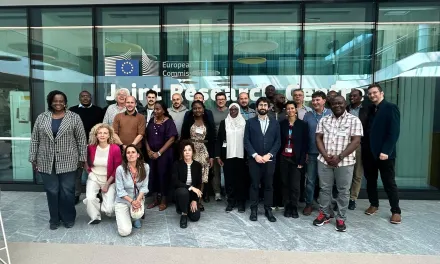
The Joint Research Centre (JRC) hosted an ArcX Programme workshop at its premises in Ispra from 20 to 24 April, bringing together representatives from African Regional Centres of Excellence (RCoEs), European Commission services and technical assistance teams.

The Regional Centre for Mapping of Resources for Development (RCMRD) is planning to host the Regional Geospatial Forum for Inclusive Biodiversity Action, taking place from 9-12 June 2026, at RCMRD, Nairobi, Kenya.

Calls for Proposals in the framework of the Africa Regional Centres of Excellence (ArcX) programme’s Ocean Component - OPERA – Ocean Prediction Enhancement in Regions in Africa are now open.

This new report provides a spatially-explicit characterisation of the ecological value of 45 Key Landscapes for Conservation and Development (KLCDs) across Sub-Saharan Africa.

Two positions have been opened at the European Centre for Medium-Range Weather Forecasts (ECMWF) under the Africa Regional Centres of Excellence (ArcX) Programme funded through the European Union’s Global Gateway initiative :

The call for tenders to provide the technical support for the development and deployment of Ocean forecasting and support the Regional Centres of Excellence is out: Development and implementation of the Ocean Prediction Decade Collaborative Centre Architecture for Ocean Forecasting - Mercator Ocean International . It is open to EU companies and institutions. 

For More News
What's new
Discover the latest datasets added or updated
Calls for Proposals in the framework of the Africa Regional Centres of Excellence (ArcX) programme’s Ocean Component - OPERA – Ocean Prediction Enhancement in Regions in Africa are now open.

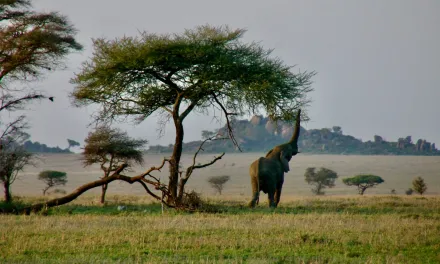
The CO2 fixed by photosynthesis is one of the most important components of the carbon cycle. Forests play a key role in this process. They represent large and persistent carbon sinks. Tree carbon stocks are important to quantify terrestrial carbon storage and carbon sinks, and to estimate potential emissions from land cover changes (deforestation, reforestation, afforestation) and from biotic (pests, diseases) and abiotic (forest fires, windstorms) disturbances. Spatially explicit data and assessments of forest biomass and carbon are thus paramount to design and implement effective sustainable forest management options and forest related policies. The above-ground carbon index presented in this dataset is expressed in Mg (megagrams or tonnes) of carbon per km2 . It corresponds to the carbon fraction of the oven-dry weight of the woody parts (stem, bark, branches and twigs) of all living trees, excluding stump and roots, as estimated by the GlobBiomass project (globbiomass.org) with 2010 as the reference year.

The Joint Research Centre (JRC) hosted an ArcX Programme workshop at its premises in Ispra from 20 to 24 April, bringing together representatives from African Regional Centres of Excellence (RCoEs), European Commission services and technical assistance teams.

Two positions have been opened at the European Centre for Medium-Range Weather Forecasts (ECMWF) under the Africa Regional Centres of Excellence (ArcX) Programme funded through the European Union’s Global Gateway initiative :

The Regional Centre for Mapping of Resources for Development (RCMRD) is planning to host the Regional Geospatial Forum for Inclusive Biodiversity Action, taking place from 9-12 June 2026, at RCMRD, Nairobi, Kenya.

Priority areas are identified using local coefficients estimated through Geographically Weighted Regression (GWR), which measures the spatially varying relationship between access to electricity and four nutrition indicators among children under five: stunting, wasting, severe wasting, and underweight.The tool highlights locations where the local association between electricity access and the selected nutrition indicator is both negative and statistically significant. In this application, priority areas are further restricted to locations where electricity access is below 80%, ensuring that the results remain relevant for policy intervention.The identified areas are classified as having strong, moderate, or mild associations according to the magnitude of the local GWR coefficient. This classification helps users determine the appropriate intensity of intervention. The spatially varying coefficients therefore allow users to identify areas where limited electricity access is most strongly associated with poorer nutritional outcomes among children under five, supporting targeted interventions, programme planning, and place-based development strategies.
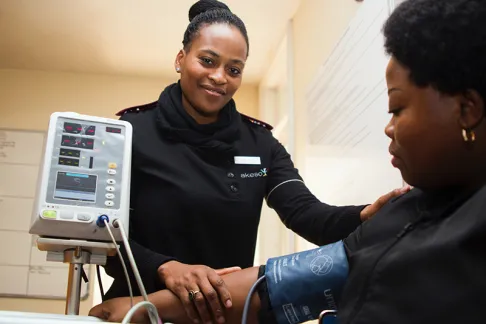
Sustainable Development Goals
Select a goal to browse the related maps, tools and stories.