Priority areas are identified using local coefficients estimated through Geographically Weighted Regression (GWR), which measures the spatially varying relationship between access to electricity and h...
Modern energy services are crucial to human well-being and to a country’s economic development; and yet 1.2 billion people are without access to electricity. It is recognized that the central grid is ...
All known formal and informal settlements of forcibly displaced and stateless people in Africa from UNHCR’s GIS database as of November 2025. Population in the settlement. It may include several cate...
Water Footprint in Africa, considered as the sum of both the green and blue WF and defined as the ratio between evapotranspiration (in m3 per hectare) and crop yield (in ton per hectare). The values a...
Percentage of schools in Africa reporting to have no electricity. The lower the education facilities with access to electricity the greater the potential for decentralised renewable energies to improv...
Average time spent by households on fuel collection daily. The higher the number of daily hours that households spend in collecting fuel, the higher the improvements in the quality of life of communit...
The International Wealth Index is an asset-based wealth index that runs from 0 (no assets) to 100 (all assets) and is comparable across place and time. The lower the level of the Index, the greater th...
The world is shrinking. Cheap flights, large scale commercial shipping and expanding road networks all mean that we are better connected to everywhere else than ever before. Accessibility - whether it...
This layer represents the predicted likelihood that a given settlement is electrified, with values ranging from 0 (no electricity) to 1 (fully electrified). The data are derived from the High Resoluti...
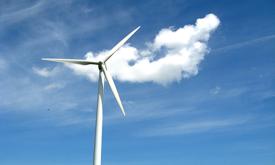
The Global Wind Atlas is a free, web-based application developed to help policymakers, planners, and investors identify high-wind areas for wind power generation. It also serves as a useful tool for g...
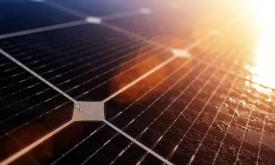
African countries have an evident potential for solar energy. Knowing the amount of solar radiation reaching the earth's surface is of particular interest for photovoltaic installations. It can be rep...
This dataset shows the African power plants and their installed capacity in MegaWatt (MW). It includes thermal plants (coal, gas, oil, nuclear, biomass, waste, geothermal) and renewables (hydro, wind,...
This dataset shows the African power plants by energy generation type. It includes thermal plants (coal, gas, oil, nuclear, biomass, waste, geothermal) and renewables (hydro, wind, solar). Each power ...
The dataset depicts the total energy demand per settlement (kWh/day) at year 5 under scenario with household consumption raised to 1000 Wh/day (at year 0). This dataset is part of the e Refugee Settle...
The INFORM Risk Index 2021 is a composite model structured into a hierarchy of dimensions, categories, and components. All scores are normalized on a scale of 0 to 10 (10 being the highest risk).Below...
In Sub-Saharan Africa, medium- and low-voltage data are often non-existent, uncompleted, or unavailable. This is a challenge for practitioners working on the electricity access agenda, power sector re...
Many African countries, especially in the Sub-Saharan region highly depend on hydropower which is one of the energy sources that are most affected by droughts. At the same time hydropower has a huge i...
Higher energy demands in Africa has led to a wide expansion of the number of hydropower sites, mainly between the 1960s and 1980s. The construction of dams causes impoundments of rivers and reservoirs...
Modern energy services are crucial to human well-being and to a country’s economic development. Yet 1.2 billion people worldwide live without access to electricity. It is recognized that the central g...
Humans need increasingly more biomass for food, fodder, fiber and energy. In Africa, circa 22% of the vegetated land surface showed a decline or unstable land productivity between 1999 and 2013. Persi...
Percentage of healthcare facilities with electricity access in selected countries. Information on electricity access for healthcare facilities has been collected in the electricity access health facil...
African countries have an evident potential for solar energy. Knowing what amount of solar radiation reaches the earth's surface is of particular interest for solar photovoltaic (PV) installations. It...
Despite a high total population, most parts of the African continent are sparsely populated, with almost 60% living in non-urban areas. Diesel generators have long been the traditional solution to dec...
These interactive stories are aimed at EU policymakers and African stakeholders. All stories are relevant to all African countries, but some present country specific data.
This selection of analytical tools allows you to interact with detailed maps and statistics. All tools are relevant to all African countries, and some have a global dimension.
The Clean Energy Access Prioritiser (CEAP) is an open-source decision-support tool designed to identify priority areas for clean energy interventions and investments. ...