Climate Change Resilience

Title: Africa Regional Centres of Excellence - ArcX: Climate Change Resilience.

Main Objective: Strengthen the climate change and disaster resilience in Sub-Saharan Africa, by improving scientific and technological capacities of the Regional Centers of Excellence, their co-ordination and capacity to contribute to policy and decision making.

Starting Year: 2026
Implementation Duration: 48 Months

Areas of Impact: Early Warning and Disaster Risk Reduction; Digital Transformation and AI Innovation; Climate Information Systems Strengthening; Research and Knowledge Generation; Capacity Development and Partnerships

Target Groups: African Regional Climate Centres (RCCs); National Meteorological and Hydrological Services (NMHSs); Regional Specialized Meteorological Centres (RSMCs); African Union Commission (AUC); Disaster Risk Reduction agencies; Water basin authorities; Agricultural advisory services; Climate planners; Early warning Systems; Academia and research institutions

ArcX Partners: to be defined

Component Coordinator: European Centre for Medium-Range Weather Forecasts (ECMWF)

Leading Regional Centre of Excellence (RCoE): to be defined

Scientific and Technical Support from EC - DG JRC: JRC Unit D6 (Nature Conservation and Observations); JRC Unit E1 (Disaster Risk Management).


Available Resources
Displaying 1 - 15 of 63
Jobs announcement
Two positions have been opened at the European Centre for Medium-Range Weather Forecasts (ECMWF) under the Africa Regional Centres of Excellence (ArcX) Programme funded through the...
The Request for Expression of Interest focusses on African–European partnership for co-designing regional pilots that demonstrate impact-based forecasting (IbF) services and tools. These...
26
Nov

ESG Climate Africa Summit

The ESG and Climate Africa Summit 2025 took place on 26–27 November 2025 at the Trademark Hotel, Nairobi, Kenya as a hybrid event.
The Convention on Wetlands of International Importance, called the Ramsar Convention, is an intergovernmental treaty that provides the framework for national action and international coop...

The Convention on Wetlands of International Importance, called the Ramsar Convention, is an intergovernmental treaty that provides the framework for national action and international cooperation for the conservation and wise use of wetlands and their resources. The Convention’s mission is “the conservation and wise use of all wetlands through local and national actions and international cooperation, as a contribution towards achieving sustainable development throughout the world”.The Convention was adopted in the Iranian city of Ramsar in 1971 and came into force in 1975. Since then, almost 90% of UN member states, from all the world’s geographic regions, have acceded to become “Contracting Parties”. As of September 2024, there are 172 contracting parties, with a total of 2,523 wetlands designated, covering an area of 257,314,434 hectares. The Fourth Ramsar Strategic Plan (2016–2024) was adopted at COP12 in 2015 and outlines a vision for wetlands conservation and wise use. It consists of four overarching goals and 19 specific targets aimed at halting and reversing global wetland loss and degradation. These targets are aligned with broader global frameworks, such as the Sustainable Development Goals (SDGs) and the Aichi Biodiversity Targets 

In 2022, the Strategic Plan was updated to incorporate new elements. Key updates include:

Mapping the Ramsar targets with the Kunming-Montreal Global Biodiversity Framework to address new biodiversity goals.

Adding three thematic annexes covering actions to support SDG implementation, communication strategies, and gender considerations​

Desertification, along with climate change and the loss of biodiversity, were identified as the greatest challenges to sustainable development during the 1992 Rio Earth Summit. Establishe...

Desertification, along with climate change and the loss of biodiversity, were identified as the greatest challenges to sustainable development during the 1992 Rio Earth Summit. Established in 1994, UNCCD is the sole legally binding international agreement linking environment and development to sustainable land management. The UNCCD is the only legally binding framework set up to address desertification and the effects of drought. There are 197 Parties to the Convention, including 196 country Parties and the European Union. The Convention – based on the principles of participation, partnership and decentralization – is a multilateral commitment to mitigate the impact of land degradation, and protect our land so we can provide food, water, shelter and economic opportunity to all people.  The objective of this Convention is to combat desertification and mitigate the effects of drought in countries experiencing serious drought and/or desertification, particularly in Africa, through effective action at all levels, supported by international cooperation and partnership arrangements, in the framework of an integrated approach which is consistent with Agenda 21, with a view to contributing to the achievement of sustainable development in affected areas.

The Kunming-Montreal Global Biodiversity Framework (GBF) was adopted during the fifteenth Conference of the Parties (COP 15) after a four-year process of consultation and negotiation. Thi...

The Kunming-Montreal Global Biodiversity Framework (GBF) was adopted during the fifteenth Conference of the Parties (COP 15) after a four-year process of consultation and negotiation. This landmark Framework, which contributes to the achievement of the Sustainable Development Goals and builds on the Convention’s previous Strategic Plans, outlines an ambitious path towards realizing the global vision of a world living in harmony with nature by 2050. The Framework's key components include four goals for 2050 and 23 targets for 2030. The vision of the Kunming-Montreal Global Biodiversity Framework is a world of living in harmony with nature where “by 2050, biodiversity is valued, conserved, restored and wisely used, maintaining ecosystem services, sustaining a healthy planet and delivering benefits essential for all people.” 

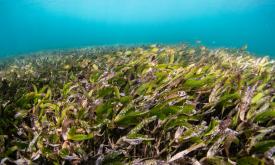
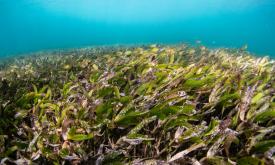
Seagrass is found on all continents except Antarctica, covering roughly 0.1% of the ocean floor. However, its global extent remains inadequately mapped, with estimates varying between 160,387 km² and ...
Tropical moist forests have a huge environmental value. They play an important role in biodiversity conservation, terrestrial carbon cycle, hydrological regimes, indigenous population subsistence and ...
This data represents the total built-up volume between 1975 and 2030 in 5 year intervals over cells of 1x1 km size. It derives from the GHS-BUILT-V - R2023A spatial raster dataset, that depicts t...
Subscribe to Climate Change Resilience