Mangroves provide both climate change mitigation and adaptation services. They provide benefits for coastal communities and they are among the most effective carbon-capture ecosystems. If they are degraded or cleared, the carbon stored will be released into the atmosphere as CO2 and it will exacerbate climate changes. Target 8 of the First Draft of the Post-2020 Global Biodiversity Framework said: “Minimize the impact of climate change on biodiversity, contribute to mitigation and adaptation through ecosystem-based approaches, contributing at least 10 GtCO2e per year to global mitigation efforts, and ensure that all mitigation and adaptation efforts avoid negative impacts on biodiversity.” Mangrove habitats contribute to climate mitigation targets. This layer wants to show the percentage of total carbon stored in mangroves per ACP country in comparison with the global mangrove total organic carbon stored.
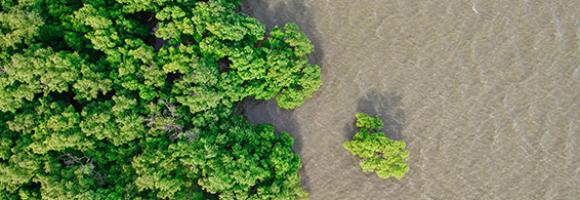
Mangroves are trees or shrubs adapted to saline and brackish environments. They are found in the intertidal zone of tropical and sub-tropical coastlines. Mangrove forests are among the most productive ecosystems on earth. They serve many important functions, including water filtration, prevention of coastal erosion, carbon storage, food, timber and livelihood provision, and biodiversity protection (as they provide habitat, nurseries, and feeding grounds for a vast array of organisms). Despite their incredible value, mangrove forests are destroyed and degraded at a rate of about 1% per year as a result of land use change, exploitation, coastal development and climate change. This layer shows the change in mangrove extent -either stable, gain or loss- between 1996 and 2016.