Climate Change Resilience

Title: Africa Regional Centres of Excellence - ArcX: Climate Change Resilience.

Main Objective: Strengthen the climate change and disaster resilience in Sub-Saharan Africa, by improving scientific and technological capacities of the Regional Centers of Excellence, their co-ordination and capacity to contribute to policy and decision making.

Starting Year: 2026
Implementation Duration: 48 Months

Areas of Impact: Still to be defined

Target Groups: Still to be defined

ArcX Partners: Still to be defined

Component Coordinator: European Centre for Medium-Range Weather Forecasts (ECMWF) - pending contract signature.

Scientific and Technical Support from EC - DG JRC: JRC Unit D6 (Nature Conservation and Observations); JRC Unit E1 (Disaster Risk Management).


Available Resources
Displaying 1 - 15 of 93
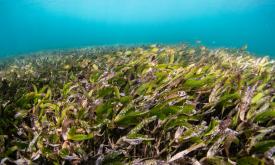
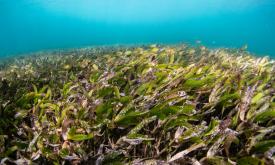
Seagrass is found on all continents except Antarctica, covering roughly 0.1% of the ocean floor. However, its global extent remains inadequately mapped, with estimates varying between 160,387 km² and ...
Tropical moist forests have a huge environmental value. They play an important role in biodiversity conservation, terrestrial carbon cycle, hydrological regimes, indigenous population subsistence and ...
The GHS-BUILT-V R2023A dataset depicts the distribution of built-up volumes, expressed as number of cubic meters. This data reports about the total built-up volume. Data are spatial-temporal interpola...