Climate Change Resilience

Title: Africa Regional Centres of Excellence - ArcX: Climate Change Resilience.

Main Objective: Strengthen the climate change and disaster resilience in Sub-Saharan Africa, by improving scientific and technological capacities of the Regional Centers of Excellence, their co-ordination and capacity to contribute to policy and decision making.

Starting Year: 2026
Implementation Duration: 48 Months

Areas of Impact: Still to be defined

Target Groups: Still to be defined

ArcX Partners: Still to be defined

Component Coordinator: European Centre for Medium-Range Weather Forecasts (ECMWF) - pending contract signature.

Scientific and Technical Support from EC - DG JRC: JRC Unit D6 (Nature Conservation and Observations); JRC Unit E1 (Disaster Risk Management).

Available Resources
Displaying 76 - 90 of 93
Changes in vegetation biomass are critical in assessing land degradation. Climate variations, alone or in combination with human-induced land use and land change, can affect biomass productivity and m...
Humans need increasingly more biomass for food, fodder, fibre and energy. Meeting these demands changes global ecosystems. Tracking changes in total biomass production or land productivity is an essen...
Water is a critical natural resource for both natural ecosystems and human subsistence. Some of the most immediate pressures on land that lead to degradation include diversion of surface waters and th...
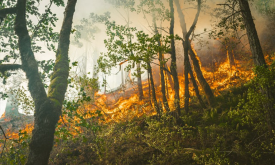
Fire is a natural part of all ecosystems. Wildfires have been burning vegetation and shaping landscapes far longer than people have been on Earth. However, changes in fire frequency and timing can res...
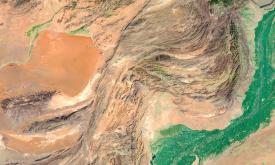
Aridity represents the ‘dryness’ of the climate. Dry areas have a higher potential for land degradation. This layer displays the areas of concern for aridity related issues derived from the convergenc...
Droughts affect millions of people in the world each year and have long-lasting socioeconomic impacts. They can occur over most parts of the world, even in wet and humid regions, and can profoundly im...
Vegetation fires have become a major concern in Africa because of their negative impacts on the environment and on human welfare. Uncontrolled (and un-prescribed) wildfires cause forest and vegetation...
Chlorophyll-a concentrations (Chla) are an indicator of phytoplankton abundance and biomass in open waters. They can be an effective measure of trophic status and are commonly used to measure water qu...
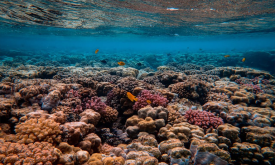
Monitoring of sea surface temperature (SST) provides fundamental information on the global climate system and for the study of marine ecosystems. This layer compares the SST value of the last full mon...
Increasing water scarcity and water quality issues are serious constraints in Africa and worldwide. Measuring precipitation anomalies is important for detecting and characterizing meteorological droug...
The Fraction of Photosynthetically Active Radiation Absorbed (FAPAR) is used to track the overall primary productivity associated with atmospheric CO2 fixation. FAPAR anomalies relative to the average...
Evapotranspiration and carbon fluxes between the biosphere and the atmosphere are routinely expressed in terms of the Leaf Area Index (LAI) of the canopy. Monitoring the change of LAI is essential for...
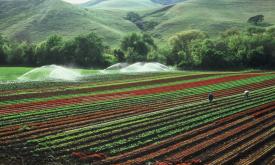
Humans need increasingly more biomass for food, fodder, fiber and energy. In Africa, circa 22% of the vegetated land surface showed a decline or unstable land productivity between 1999 and 2013. Persi...
Climate - in terms of temperature, precipitation and continentality - is a primary determinant in the distribution of vegetation. Salvador Rivas-Martinez and Salvador Rivas-Saenz (2004) developed a gl...
This indicator assesses whether there is enough natural habitat surrounding cropland to support natural pollination. Up to two-thirds of all crops require some degree of animal pollination to reach th...