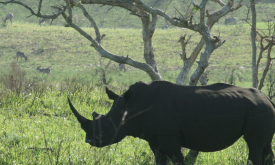
The number of African rhinos is increasing despite poaching. By the end of 2022, it is estimated that there were 23,290 rhinos in Africa, a 5.2% increase compared to 2021. However, at lea...
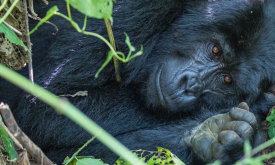
In this StoryMap, we aim to raise awareness about gorilla conservation and their distribution across countries. Despite a long history of conservation efforts, the two species and their r...
New Technologies for Wildlife Conservation. Over the last decade, the total surface of protected and conserved areas has increased, demonstrating the success of area-based conservation ef...
BIOPAMA at the International Day of Biological Diversity
As a matter of a fact, biodiversity has been declining at an alarming rate in the last decades due to the human pressure and acti...
Supporting Conservation Strategies, Improving Biodiversity Protection. Systematic monitoring of biodiversity status is essential to address the biodiversity crisis we are facing.
Protected areas in Africa play a critical role in biodiversity conservation, supporting livelihoods, and mitigating climate change. This tool offers a comprehensive analysis of the dynami...
The EC JRC global map of forest cover provides a spatially explicit representation of forest presence and absence for the year 2020 at 10m spatial resolution.The year 2020 corresponds to the cut-off d...
This dataset shows the global distribution of coral reefs in tropical and
subtropical regions. It is the most comprehensive global dataset of
warm-water coral reefs to date, acting as a foundation b...
Forests worldwide are in a state of flux, with accelerating losses in some regions and gains in others. Given the recognized importance of forest ecosystem services, quantification of global forest ex...
Forests worldwide are in a state of flux, with accelerating losses in some regions and gains in others. Given the recognized importance of forest ecosystem services, quantification of global forest ex...