Title: Africa Regional Centres of Excellence - ArcX: Agroecology Component.
Main Objective: Strengthen Regional Centres of Excellence (RCoEs) in agroecology across sub-Saharan Africa to accelerate the transition towards productive, resilient, and sustainable food systems by integrating agroecological principles with scientific and local knowledge.
Specific Objectives:
Strengthen the scientific, technological, and institutional capacities of sub-regional organisations (SROs) and RMRNs/RCoEs in agroecology;
Enhance the contribution of RMRNs/RCoEs to transformative, high-quality agroecological research;
Improve cross-sectoral and inter-regional coordination to tackle science, technology, and innovation challenges in Africa’s green transition.
Data collection & sharing: Document and disseminate agroecological practices through open-source platforms;
Decision-support: Produce scientific and policy analyses for informed strategic planning;
Capacity development: Deliver targeted training and strengthen professional networks;
Innovation support: Develop and scale up innovative agroecological solutions;
Global engagement: Integrate African agroecology into international frameworks and global fora.
Target Groups: Scientific community (economists, agronomists, food-system experts, etc.), data and information managers, international organisations, private sector, universities, local communities, regional economic communities, continental bodies, African farmers, and citizens.
Component Coordinator: Forum for Agricultural Research in Africa (FARA) and Regional Universities Forum for Capacity Building in Agriculture (RUFORUM).
Leading Regional Centre of Excellence (RCoE): Centre for Coordination of Agricultural Research and Development for Southern Africa (CCARDESA), International Centre of Insect Physiology and Ecology (ICIPE), West and Central African Council for Agricultural Research and Development (CORAF)
Scientific and Technical Support from EC - DG JRC:DG-JRC Directorate D (Sustainable Resources) Unit D5 (Food Security) and Unit D4 (Economics of the Food System).
Given the massive scale of livestock production systems, it is unlikely that any other single human activity has a larger environmental impact on the terrestrial land mass of the planet. As the world’...
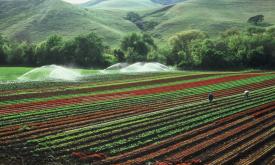
The application of fertiliser is a key component in increasing agricultural production. However, there are thresholds beyond which the cost of inputs fails to lead to corresponding increases in yield....
Soil organic carbon (SOC) is the carbon that remains in the soil after partial decomposition of any material produced by living organisms. It constitutes a key element of the global carbon cycle throu...
Roots are a long term and stable carbon sink, accounting for about 0.4 of the above ground biomass across biogeographical regions. Well established and developed root systems provide various ecosystem...
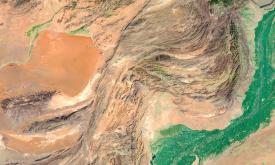
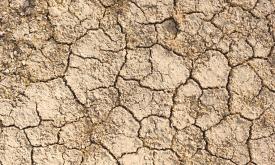
Droughts affect millions of people in the world each year and have long-lasting socioeconomic impacts. They can occur over most parts of the world, even in wet and humid regions, and can profoundly im...
Droughts affect millions of people in the world each year and have long-lasting socioeconomic impacts. They can occur over most parts of the world, even in wet and humid regions, and can profoundly im...
Agricultural drought events can affect large regions across the world. Soil moisture (or soil water content) is an important variable for plant growth, and - together with precipitation and evapotrans...
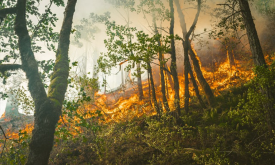
Vegetation fires have become a major concern in Africa because of their negative impacts on the environment and on human welfare. Uncontrolled (and un-prescribed) wildfires cause forest and vegetation...
Crop conditions monitoring is highly relevant for food security early warning and response planning in food-insecure areas of the world. GEOGLAM (the Group on Earth Observations' Global Agricult...
Humans need increasingly more biomass for food, fodder, fiber and energy. In Africa, circa 22% of the vegetated land surface showed a decline or unstable land productivity between 1999 and 2013. Persi...
The African Development Corridors Database (ADCD) is a comprehensive, georeferenced database detailing 79 ongoing and planned investment corridors across Africa, synthesizing data on 184 specific infr...
Sokoine University of Agriculture (SUA) is a public University based in Morogoro Tanzania. It is best known for offering courses and programmes widely in a field of Agriculture, Veterinary Science, Forestry, Animal Science, Wildlife Management, Tourism Management, Environmental Science, Food Science, Natural Resources, Nutrition, Rural Development, since its establishment.
Makerere University is a thought leader of knowledge generation for societal transformation and development. The University is committed to providing transformative and innovative teaching, learning, research and services responsive to dynamic national and global needs.
The Forum for Agricultural Research in Africa (FARA) is the apex continental organization responsible for coordinating and advocating for agricultural research for development (AR4D). FARA serves as the technical arm of the Africa Union Commission on matters concerning agriculture science, technology and innovation. FARA is part of the coordinating body of the PANAP network
Sustainable Development Goals
The 2030 Agenda for Sustainable Development, adopted by all United Nations Member States in 2015, provides a shared blueprint for peace and prosperity for people and the planet, now ...
The 2030 Agenda for Sustainable Development, adopted by all United Nations Member States in 2015, provides a shared blueprint for peace and prosperity for people and the planet, now and into the future. At its heart are the 17 Sustainable Development Goals (SDGs), which are an urgent call for action by all countries - developed and developing - in a global partnership. They recognize that ending poverty and other deprivations must go hand-in-hand with strategies that improve health and education, reduce inequality, and spur economic growth – all while tackling climate change and working to preserve our oceans and forests.
In June 1992, at the Earth Summit in Rio de Janeiro, Brazil, more than 178 countries adopted Agenda 21, a comprehensive plan of action to build a global partnership for sustainable development to improve human lives and protect the environment.
Member States unanimously adopted the Millennium Declaration at the Millennium Summit in September 2000 at UN Headquarters in New York. The Summit led to the elaboration of eight Millennium Development Goals (MDGs) to reduce extreme poverty by 2015.
The Johannesburg Declaration on Sustainable Development and the Plan of Implementation, adopted at the World Summit on Sustainable Development in South Africa in 2002, reaffirmed the global community's commitments to poverty eradication and the environment, and built on Agenda 21 and the Millennium Declaration by including more emphasis on multilateral partnerships.
At the United Nations Conference on Sustainable Development (Rio+20) in Rio de Janeiro, Brazil, in June 2012, Member States adopted the outcome document "The Future We Want" in which they decided, inter alia, to launch a process to develop a set of SDGs to build upon the MDGs and to establish the UN High-level Political Forum on Sustainable Development. The Rio +20 outcome also contained other measures for implementing sustainable development, including mandates for future programmes of work in development financing, small island developing states and more.
In 2013, the General Assembly set up a 30-member Open Working Group to develop a proposal on the SDGs.